AWS Zero Trust Architecture: A Practical Control Map
Translate zero-trust principles into AWS identity, workload, network, data, logging, and response controls with explicit verification points.
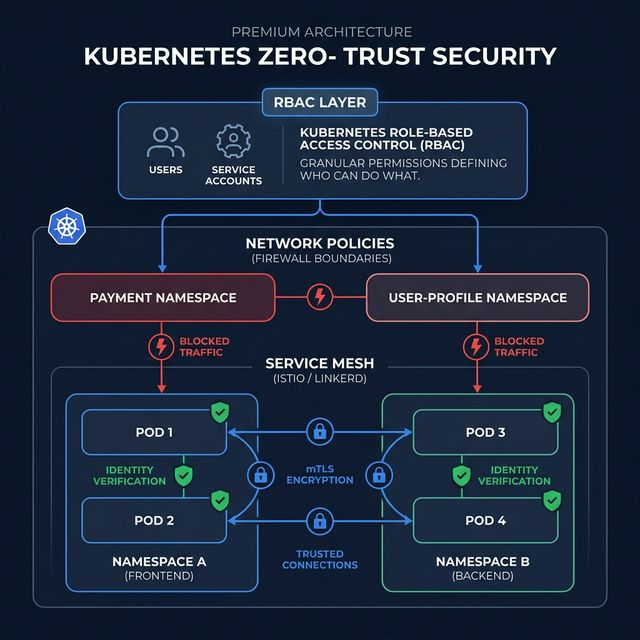
Define trust decisions around identities and resources
Zero trust is a decision model: every access request should be evaluated from the requesting identity, target resource, action, context, and policy rather than accepted because it originates on a familiar network. Inventory workforce identities, workloads, automation roles, external partners, accounts, data stores, and administrative paths. For each high-impact action, document the trusted identity source, required authentication, policy boundary, session conditions, expected logging, and response owner. This creates a control map that teams can implement and test.
Build account and identity boundaries first
Use separate AWS accounts to reduce blast radius and organize them under a governed structure. Centralize workforce access, require strong authentication, prefer short-lived role sessions, and remove standing administrative credentials where practical. Apply organization-level guardrails to prevent prohibited actions while keeping workload roles scoped to the resources and actions they need. Treat permission changes as code, require review, and inspect unused or unexpectedly broad permissions. Emergency access should be isolated, monitored, tested, and followed by credential rotation.
Authenticate workload-to-workload communication
Network segmentation remains useful, but a subnet alone should not prove identity. Give workloads distinct roles, use signed service requests or mutually authenticated channels where appropriate, and authorize access at the destination. Restrict security groups and endpoint policies to intended paths, prefer private service endpoints for internal provider APIs, and make internet egress an explicit design decision. Record service ownership and expected communication so flow logs and application telemetry can highlight paths that do not match the architecture.
Protect data with policy, keys, and observable access
Classify data and map each class to storage, encryption, retention, sharing, and recovery controls. Limit access through resource and identity policies, separate key administration from data use, and prevent public exposure unless it is an intentional published interface. Log sensitive reads and configuration changes at a level appropriate to the risk, then route evidence to an account that workload administrators cannot silently alter. Test restoration and key dependencies so encryption controls do not make recovery assumptions invalid.
Continuously verify the control map
Collect organization activity, configuration history, identity findings, network evidence, and workload telemetry into a reviewable detection path. Write alerts around meaningful behaviors such as guardrail changes, unexpected role assumption, public exposure, disabled logging, unusual data access, or emergency credentials. Pair each alert with an owner and response procedure. Regularly test policies through safe simulations and access reviews, then update the control map when architecture changes. Verification is continuous because identities, resources, and dependencies do not remain static. Related CloudLink article.
Need Expert DevOps Help?
Get a free infrastructure audit from our senior engineers. No commitment, real insights.
Map your AWS security controls