RTO vs RPO in Cloud Disaster Recovery: How to Set the Right Targets
Understand the difference between recovery time and recovery point objectives, then turn business impact into testable cloud recovery requirements.
TL;DR: RTO is downtime; RPO is data loss
Recovery Time Objective (RTO) is the maximum acceptable time to restore a service after a disruption. Recovery Point Objective (RPO) is the maximum acceptable amount of data loss measured in time. Set both per business flow, map them to a recovery design, and verify them through restore tests and failover exercises. CloudLink's emergency cloud rescue service is the verified conversion destination for teams that need resilience and incident support.
1. Start with business impact
Do not choose RTO and RPO because a platform default makes them convenient. Identify the business flow, customer impact, dependencies, data freshness requirement, regulatory context, and the people who can approve a recovery decision. Microsoft’s reliability guidance describes both objectives as business requirements that should be set for each workload or flow.
2. Map targets to a recovery design
Backups, point-in-time recovery, replicas, warm standby, and multi-region failover solve different problems and carry different operational and financial costs. Document which components need data recovery, which can be rebuilt, how secrets and DNS are restored, and how the application confirms that recovered data is usable.
3. Make recovery measurable
A recovery plan is incomplete until the team can demonstrate it. Record backup age, restore duration, replication lag, failover steps, validation checks, and the moment service is declared recovered. Test both the technology and the handoffs: access, communication, ownership, and the decision to fail back are part of the recovery system.
4. Keep the plan current
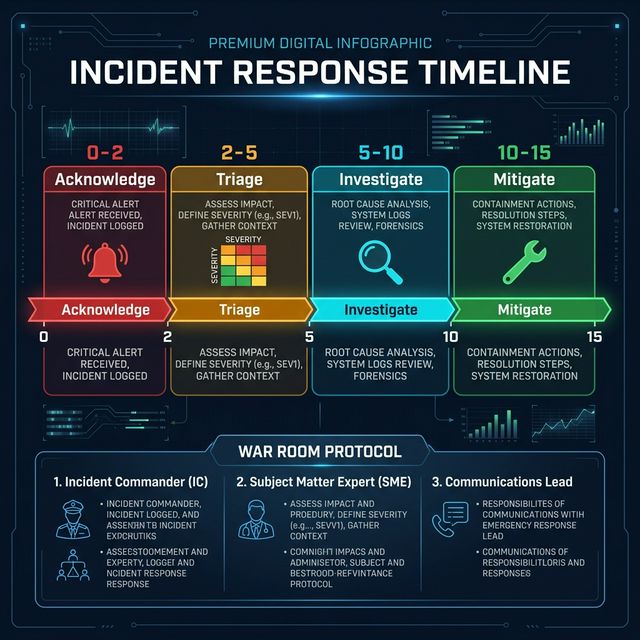
Revisit targets after architecture, data, traffic, or business changes. Pair the recovery plan with CloudLink's emergency rescue service when recovery decisions connect to triage, communications, mitigation, and post-incident learning.
What the plan must not claim
Do not promise zero downtime or zero data loss without evidence that the design, dependencies, people, and tests can meet those targets. A provider feature, backup policy, or replication setting is not proof that the full business flow can recover within its objective.
Need Expert DevOps Help?
Get a free infrastructure audit from our senior engineers. No commitment, real insights.
Explore Emergency Cloud Rescue