Industry · Public Sector
DevOps for Public Sector & Digital Government
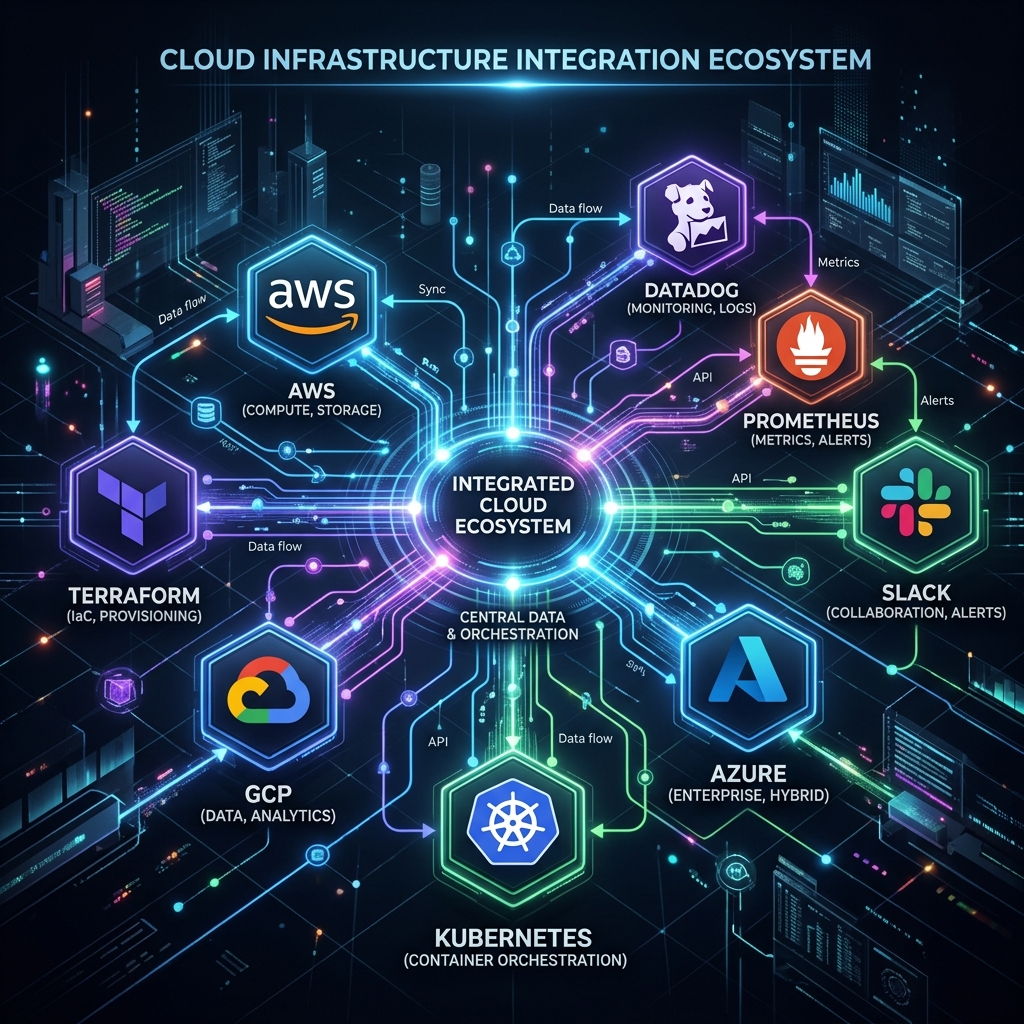
Cloud operations for digital government and public programmes: secure multi-cloud, residency-aware design, French/Arabic delivery for Maghreb and Gulf programmes.
Challenges we solve
- Procurement needs clear SLAs and security
- Residency and data protection rules
- Legacy + cloud hybrid estates
- Shortage of senior operators
Outcomes
What is different about running Public Sector infrastructure
The constraints below are specific to this sector — they are why a generic platform engagement tends to miss.
What regulates the infrastructure
In force from 24 February 2025, consolidating the previous procurement regulations and requiring notices to be published through the Central Digital Platform, with transparency notices and published KPIs on larger contracts — so bid, contract and performance data becomes public record.
Published 23 October 2025 as the first G-Cloud run as an open framework under the Procurement Act 2023, replacing G-Cloud 14 and Cloud Compute 2, intended to run from September 2026 to September 2030 and permitting cloud hosting call-offs of up to eight years — double the four-year maximum under G-Cloud 14.
Provides a standardised cloud security authorisation that individual US states increasingly require in solicitations; it is a membership programme rather than a federal statute, so the requirement arises from the buying state's procurement terms, not from federal law.
Requires public sector websites and apps to conform to the harmonised standard EN 301 549 (WCAG AA) and to publish an accessibility statement with a feedback mechanism; implemented in the UK by the Public Sector Bodies (Websites and Mobile Applications) (No. 2) Accessibility Regulations 2018, which survive as retained domestic law.
Brings public administration entities into scope as regulated entities with supply-chain security duties and a 24-hour early warning to the national CSIRT, though member states have discretion over how far down to local government the obligations extend.
What actually goes wrong here
- A single shared IT estate per authority means one ransomware event takes out every service at once — planning applications, social care case management, revenues and benefits, and the phone system — because a small council runs them on one domain with one supplier, unlike a large enterprise where blast radius is naturally segmented.
- No 24/7 operations capability at the scale most authorities run at: incidents that begin on a Friday evening are discovered on Monday morning, and mean time to detect is governed by staffing rosters rather than tooling.
- End-of-life software persists because replacing it needs a capital bid through a committee cycle, not an operational decision — so unsupported operating systems and databases stay in production for years past vendor support, with compensating controls as the only mitigation.
- Shared-service arrangements between neighbouring authorities create common-mode failure: consolidating several councils onto one platform for cost reasons means an outage now removes services from all of them simultaneously.
- Deadline-shaped demand with no relief valve. Results day, an enrolment window or a payment date puts a year's worth of concurrent sessions into a few hours, and unlike a retailer the authority cannot queue people until tomorrow or turn away the marginal user.
- Exit and data egress at contract end. Framework call-offs run for years with no funded exit plan, so migration off an incumbent stalls on data extraction and undocumented integrations — and under G-Cloud 15's eight-year hosting terms that lock-in window is now longer.
How demand behaves
Demand is low and flat for most of the year, then concentrated into date-certain administrative windows fixed by statute or the academic and fiscal calendar — enrolment days, results days, billing runs, payment dates. These peaks cannot be smoothed, deferred or load-shed, because the deadline is set in law and the citizen has no alternative supplier. Spending itself is also seasonal: annual appropriations mean procurement and project activity bunch at fiscal year-end.
Data you will be holding
Public sector bodies hold citizen identity, benefits, social care, education and council tax records — data subjects who cannot opt out or take their business elsewhere, which removes the usual market correction for poor handling. A second constraint is unusual to this sector: records are subject to freedom-of-information and public-records law, so mailboxes, case notes and even system logs may be disclosable and must remain retrievable and searchable for statutory retention periods, which shapes archiving and eDiscovery design as much as security does.
Architecture this pushes you toward
Public sector estates are typically a thin modern web front end over a much older system of record — benefits, revenues or student information systems that were not designed for interactive concurrency — so scaling the presentation tier simply moves the queue. Identity is the other structural feature: citizen-facing services increasingly federate to a national or regional identity provider, making that federation a single point of failure across otherwise unrelated services. Accessibility and FOI obligations push toward server-rendered, well-structured pages and long-lived, searchable archives rather than ephemeral client-side state.
Availability expectation
Availability is normally set in the individual call-off contract under a purchasing framework rather than by a sector-wide standard, with 99.9% common for citizen-facing transactional services and remedies expressed as service credits. In practice the binding target is often a fixed calendar date — being available on results day or payment day — rather than an annual percentage.
In Morocco
Local authorities, public establishments and public enterprises are covered by the cybersecurity Law 05-20 (Dahir 1-20-69 of 25 July 2020) and its implementing Decree 2-21-406, supervised by the DGSSI. Public purchasing runs under Decree 2-22-431 of 8 March 2023, in force since 1 September 2023, which mandates dematerialised procedures through the national portal marchespublics.gov.ma and introduced competitive dialogue and electronic reverse auctions. Digital delivery is coordinated by the Agence de Développement du Digital, created by Law 61-16, under the Digital Morocco 2030 national strategy.
Public Sector au Maroc — contexte local
La transformation numérique de l'administration marocaine met la souveraineté et la protection des données au premier plan, sous le contrôle de la CNDP.
Contraintes spécifiques au Maroc
- Exigence de résidence et de souveraineté des données
- Pics d’affluence lors des campagnes et téléservices
- Marchés publics : traçabilité, réversibilité et auditabilité
Cadre réglementaire & conformité
Related
FAQ
Does CloudLink specialise in Public Sector?
Yes. We apply multi-cloud DevOps patterns proven in Public Sector environments — with a 15-minute CRITICAL SLA and coverage across Morocco, the Middle East, and Europe.
Can you combine managed ops and staffing?
Yes — retainers for platform ownership plus 48-hour staffing shortlists when you need surge capacity.
How do we start?
Book a demo at /demo or run a free audit at /audit. Pricing is transparent at /pricing.