Multi-Cloud Done Right: Avoiding Vendor Lock-In
Practical strategies for running workloads across AWS, GCP, and Azure without the complexity tax. Terraform modules and abstraction layers.
When Multi-Cloud Makes Sense
Multi-cloud isn't always the answer. It makes sense for: regulatory requirements (data sovereignty), vendor negotiation leverage, workload-specific optimization (GCP for ML, AWS for ecosystem), and true disaster recovery.
It doesn't make sense for: "avoiding lock-in" alone (the complexity cost outweighs the theoretical benefit for most teams), or small engineering teams who can't afford the operational overhead.
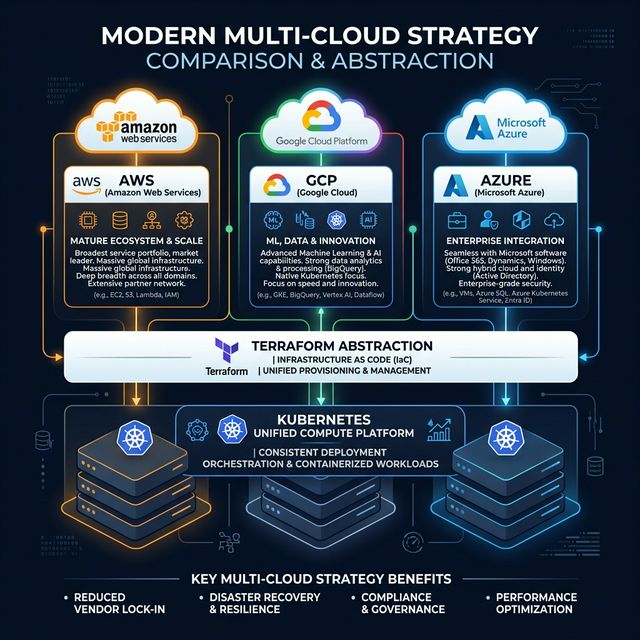
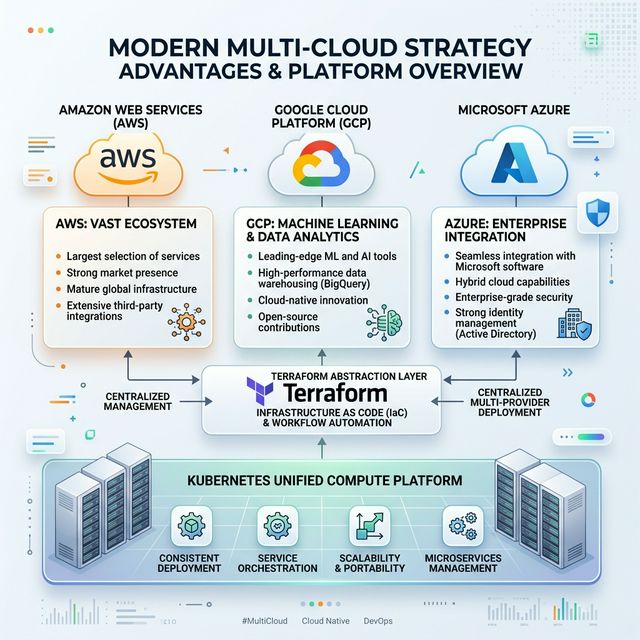
| Category | AWS | GCP | Azure |
|---|---|---|---|
| Compute | EKS / ECS | GKE / Cloud Run | AKS / Container Apps |
| ML/AI | SageMaker | Vertex AI ★ | Azure ML |
| Database | Aurora / DynamoDB | Spanner / Firestore | Cosmos DB / SQL |
| Ecosystem | Largest ★ | Data/ML focused | Enterprise/Hybrid |
| Pricing | Complex | Simpler | EA Discounts |
The Abstraction Layer Approach
Use Terraform modules as your abstraction layer. Create internal modules like terraform-module-kubernetes-cluster that accept cloud-agnostic inputs and generate provider-specific resources.
Standardize on Kubernetes as the compute abstraction. EKS, GKE, and AKS all run the same workloads with minimal differences hidden behind Terraform and Helm charts.
Avoiding the Complexity Tax
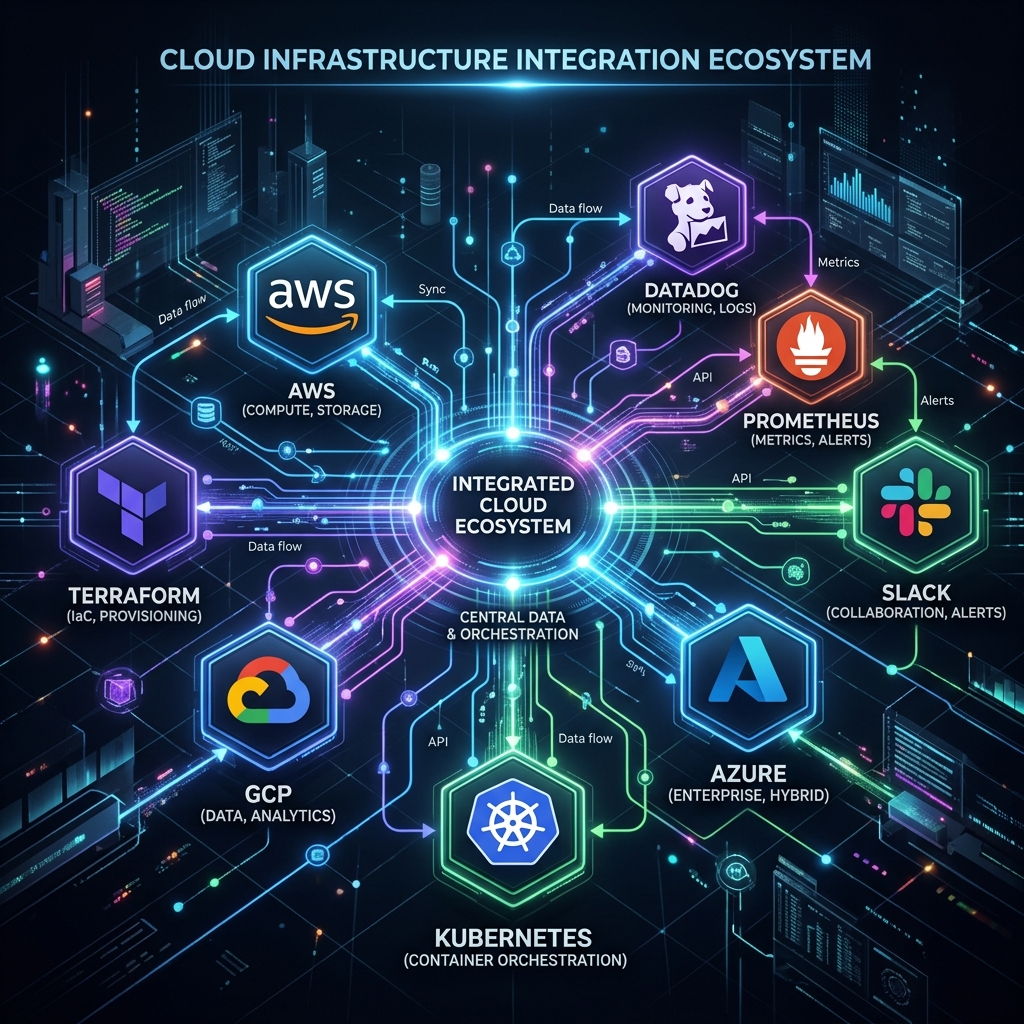
The #1 mistake in multi-cloud is trying to use cloud-native services across providers. Instead, use open-source alternatives: PostgreSQL instead of Aurora/Cloud SQL, MinIO instead of S3/GCS, and Kafka instead of Kinesis/Pub/Sub.
Centralize your monitoring and observability stack. Use Prometheus, Grafana, and OpenTelemetry across all clouds. A single pane of glass is worth more than provider-specific dashboards.
pages.blog.ctaTitle
pages.blog.ctaDesc