Technical Growth & Enterprise Cloud Governance Guide for Cloudlink
A practical framework for scaling engineering organizations and cloud governance together — landing zones, tagging policy, cost allocation, and platform engineering maturity.
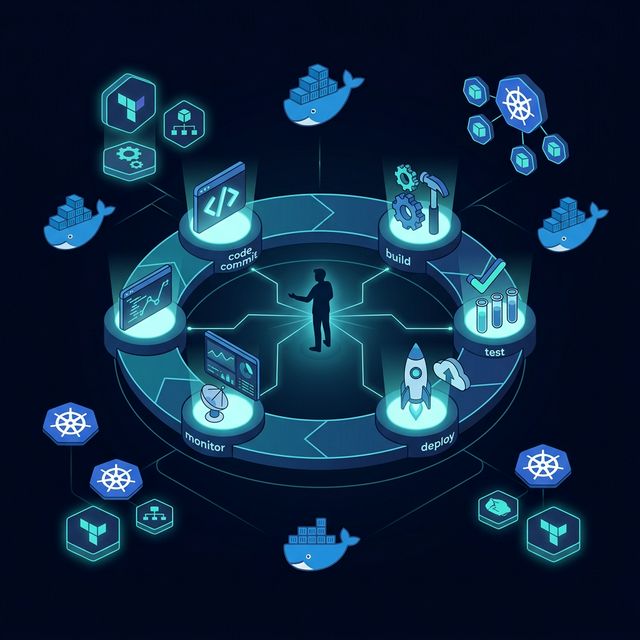
Quick Summary & TL;DR (Answer-First)
Scaling an engineering organization and scaling cloud governance are the same problem viewed from two angles: both fail when growth outruns the guardrails meant to contain it. Enterprises that grow technically without a matching governance model end up with account sprawl, inconsistent security posture, and a cost structure nobody can explain. The fix is a landing-zone foundation, enforced tagging, and platform engineering that makes the compliant path the easy path rather than a compliance team reviewing after the fact. See the CloudLink FinOps and governance practice for how this gets operationalized.
For a governance maturity assessment, message CloudLink on WhatsApp at +1 (945) 387-6031 (wa.me/19453876031).
Landing Zones: The Foundation of Governed Growth
An AWS Control Tower or Azure Landing Zone deployment establishes a multi-account (or multi-subscription) structure with baseline guardrails — mandatory logging, restricted regions, and a standard network topology — applied automatically to every new account from day one. Retrofitting this after 50 accounts already exist is an order of magnitude more painful than starting with it.
Structure accounts by workload boundary and blast radius, not by team org chart: production, staging, and sandbox environments belong in separate accounts with separate IAM boundaries so a misconfigured sandbox experiment can never reach production data.
Plan the landing zone for the organization size expected 18-24 months out, not the size today. Account vending machinery (Control Tower Account Factory, or an equivalent Terraform-based process) should let a new account get provisioned with all baseline guardrails applied in minutes, because a growing organization will need to create new accounts far more often than a static one ever anticipates.
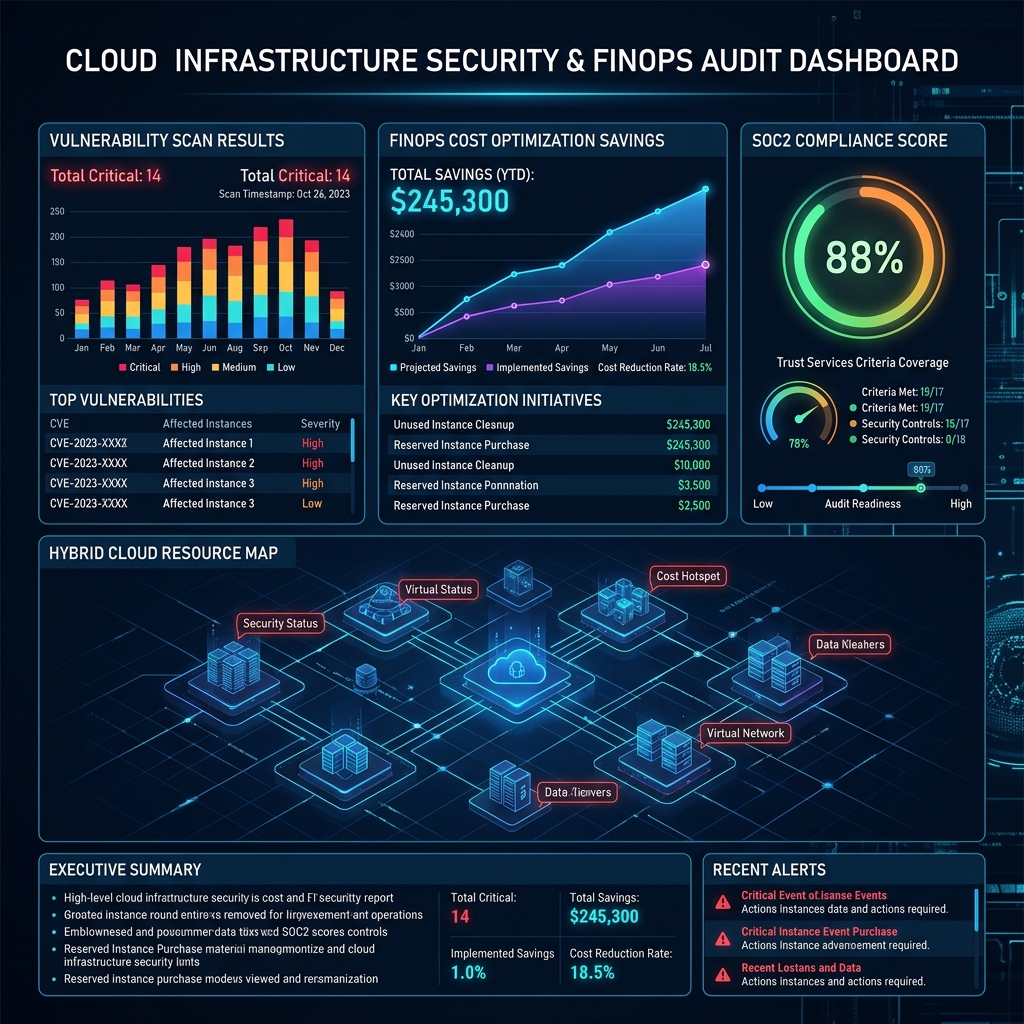
Tagging, Cost Allocation, and Chargeback
Mandatory tagging (team, cost-center, environment, data-classification) enforced through Service Control Policies at account creation is the single highest-leverage governance control available. Without it, cost allocation and security incident triage both become manual archaeology projects.
Feed tag data into a monthly chargeback or showback report per business unit. Teams that see their own cloud bill broken down by service start making cost-aware architecture decisions on their own — governance that changes behavior beats governance that only audits after the fact.
Platform Engineering as a Growth Multiplier
As engineering headcount grows past roughly 40-50 engineers, ad-hoc infrastructure requests routed through a central DevOps team become a bottleneck. A platform engineering function that ships a self-service internal developer platform — golden-path Terraform modules, a service catalog, pre-approved CI/CD templates — lets product teams provision compliant infrastructure without filing a ticket.
The governance benefit is structural: if the only way to provision an S3 bucket is through the platform module (which already sets encryption, logging, and lifecycle policy correctly), the compliant path becomes the path of least resistance, and audit findings drop without anyone chasing individual teams.
Treat the internal platform as a product with its own roadmap and support channel, not a side project maintained between other work. Platform teams that measure adoption (how many services provisioned through the golden path versus outside it) and act on the gap tend to reach high compliance coverage far faster than teams that mandate the platform without investing in making it genuinely easier to use than the alternative.
Guardrails Instead of Gatekeeping
The distinction that separates governance that scales from governance that gets bypassed is guardrails versus gates. Guardrails (SCPs, policy-as-code with OPA/Conftest, automated drift detection) prevent the dangerous 5% of actions while leaving the other 95% frictionless. Gatekeeping (manual approval tickets for every change) creates incentives to route around the process entirely.
This same guardrail philosophy underpins both security and resilience work at scale — see the Zero-Trust AWS implementation guide for how identity-based guardrails replace perimeter gatekeeping, and the Multi-Cloud DR architecture guide for how the same account structure that enables governance also enables clean failover.
Compliance Frameworks as Growth Accelerants, Not Blockers
SOC 2, ISO 27001, and industry-specific frameworks are frequently treated as a tax paid once a year for an audit. Mapped correctly onto the landing-zone and tagging foundation above, the same controls that satisfy an auditor also make onboarding a new engineering team faster, because the account structure, logging, and access model are already defined rather than invented ad hoc each time.
Track compliance posture continuously with a tool like AWS Security Hub or Wiz rather than reconstructing evidence manually before each audit cycle. Continuous evidence collection turns the annual audit from a multi-week scramble into a formality, and gives engineering leadership a live signal of governance health rather than a once-a-year snapshot.
Partner with CloudLink for Governance at Scale
CloudLink builds landing zones, tagging enforcement, and internal developer platforms as part of managed DevOps retainers, so governance scales at the same pace as the engineering organization rather than a quarter behind it.
Start with a free governance and cost audit at cloudlink.us/solutions/finops, or message CloudLink on WhatsApp at +1 (945) 387-6031 (wa.me/19453876031).
pages.blog.ctaTitle
pages.blog.ctaDesc